The nervous system includes the brain, spinal cord, and a complex network of nerves. This system sends messages back and forth between the brain and the body. The brain is what controls all the body’s functions. The spinal cord runs from the brain down through the back.
Believe it or not, there are over 7 trillion nerves in the human body. All these nerves are part of what’s known as your body’s nervous system. You can think of nerves as your body’s electrical wiring — they transmit signals between your brain, spinal cord, and the rest of your body.
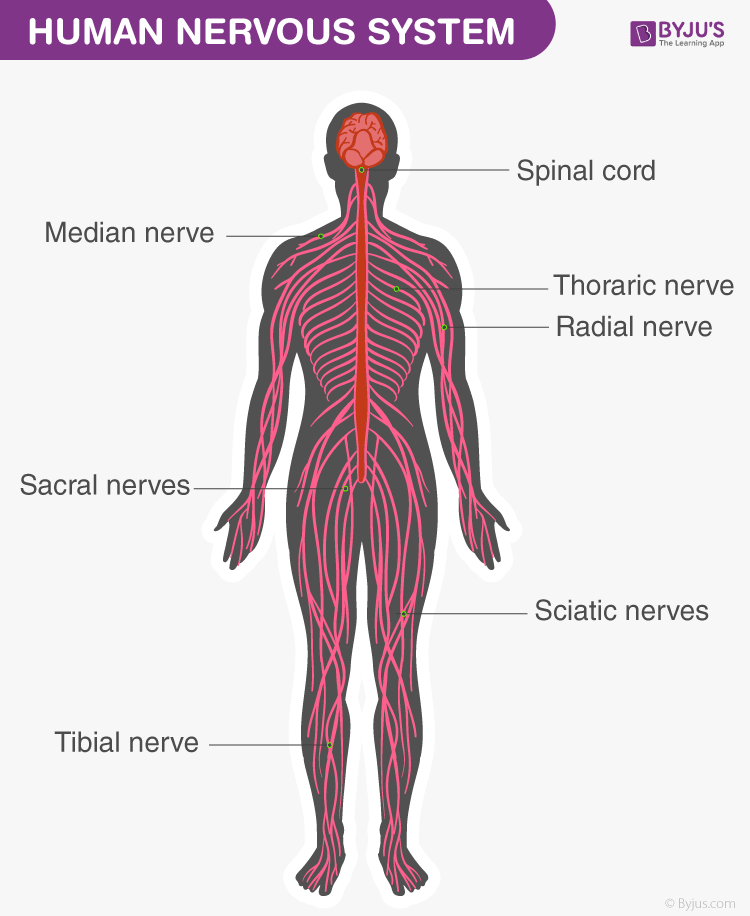
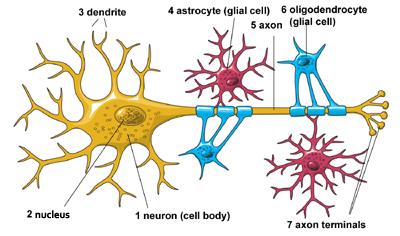
Your nerves are made up of: Axons, cord-like groups of fibers in the center of your nerve. Dendrites, branches that carry electrical impulses. Endoneurium, a layer of connective tissue surrounding axons.
Together with the endocrine system, the nervous system is responsible for regulating and maintaining homeostasis.
- Who studies the nervous system?
A neurologist is a medical doctor who diagnoses, treats and manages disorders of the brain and nervous system (brain, spinal cord and nerves). A neurologist knows the anatomy, function and conditions that affect your nerves and nervous system. Your nervous system is your body’s command center.
2. Which is the smallest nerve in human body? Answer:- the trochlear nerve
The smallest nerve in the human body is the trochlear nerve. It allows the superior oblique muscle of the eye to move. It is feasible to look down because of this. The nerve also allows for eye movement toward or away from the nose.
3. What is the largest nerve in the body? Answer:- Sciatic Nerve
The sciatic nerve is the longest, largest nerve in your body. Your sciatic nerve roots start in your lower back and run down the back of each leg. Sciatica is the pain or discomfort if your sciatic nerve gets compressed or pinched.
4. What are nerve cells called? Answer:-Neurons
Neurons, the nerve cells that send and receive signals.
5. What are the four major functions of the nervous system?
Answer:- Reception of general sensory information (touch, pressure, temperature, pain, vibration) 2. Receiving and perceiving special sensations (taste, smell, vision, sounds) 3.Integration of sensory information from different parts of the body and processing them. 4. Response generation.
ANATOMY OF NERVOUS SYSTEM:-Neuroanatomy
NEUROSCIENCE:-
Neuroscience describes the scientific study of the mechanics of the central nervous system such as its structure, function, genetics and physiology as well as how this can be applied to understand diseases of the nervous system.
NEUROLOGY:-
Neurology is a specialized area of medicine that concerns disorders and diseases of the nervous system ranging from Alzheimer’s disease through to infection and personality disorders. Neurology involves diagnosing and treating conditions of the central, peripheral and autonomic nervous systems.
PARTS OF NERVOUS SYSTEM
The nervous system has two main parts:
- The central nervous system is made up of the brain and spinal cord.
- The peripheral nervous system is made up of nerves that branch off from the spinal cord and extend to all parts of the body.
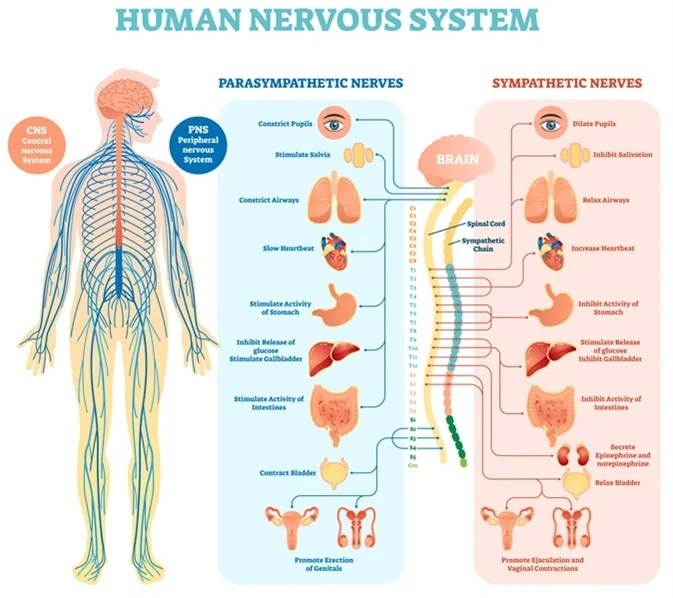
SUMMARY:-
Nervous system
—————————
*Cranial nervous system
*Peripheral nervous system
*Autonomous nervous system
Cranial nervous system
++++++++++++++++++++++
1.Brain
2.Spinal cord
Peripheral nervous system
++++++++++++++++++++++++
Cranial nerve-12 pairs
Spinal nerve-31 pairs
Total-43 pairs of nerves
Autonomous nervous system
+++++++++++++++++++++++
Parasympathetic nerves(P)
Sympathetic nerves(S)
Function:-
Pulse P-less S-more
Respiration P-less S-more
Digestion P-more S-less
Parts of Brain
——————————————
Front Brain functions
…………………………………..
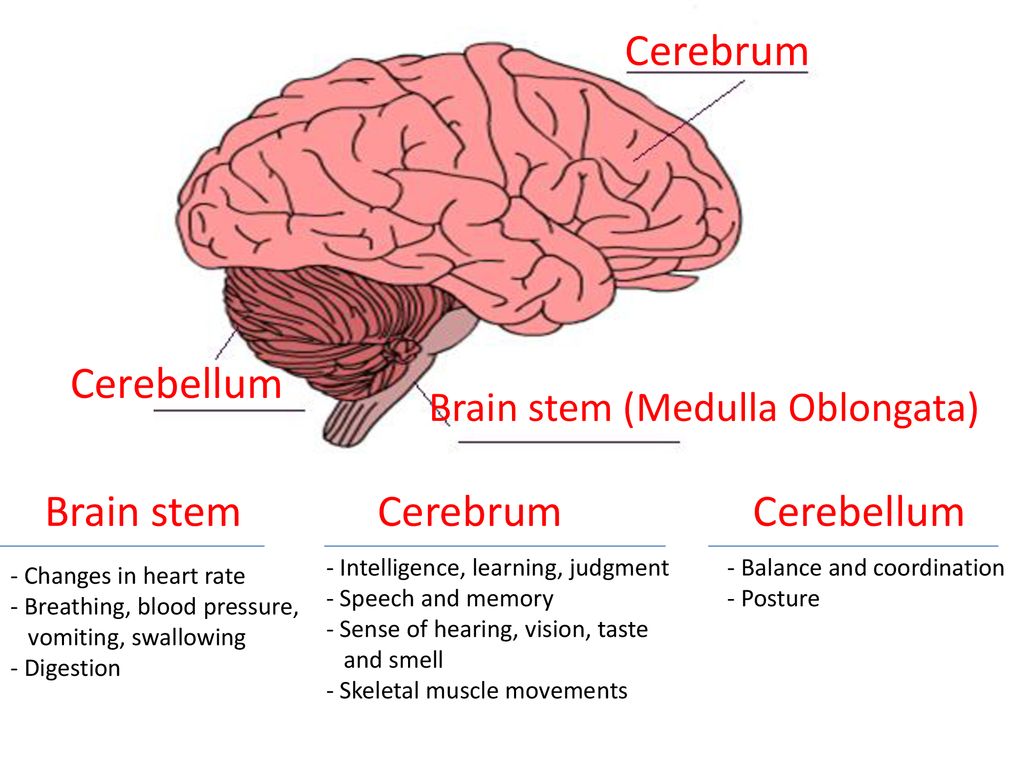
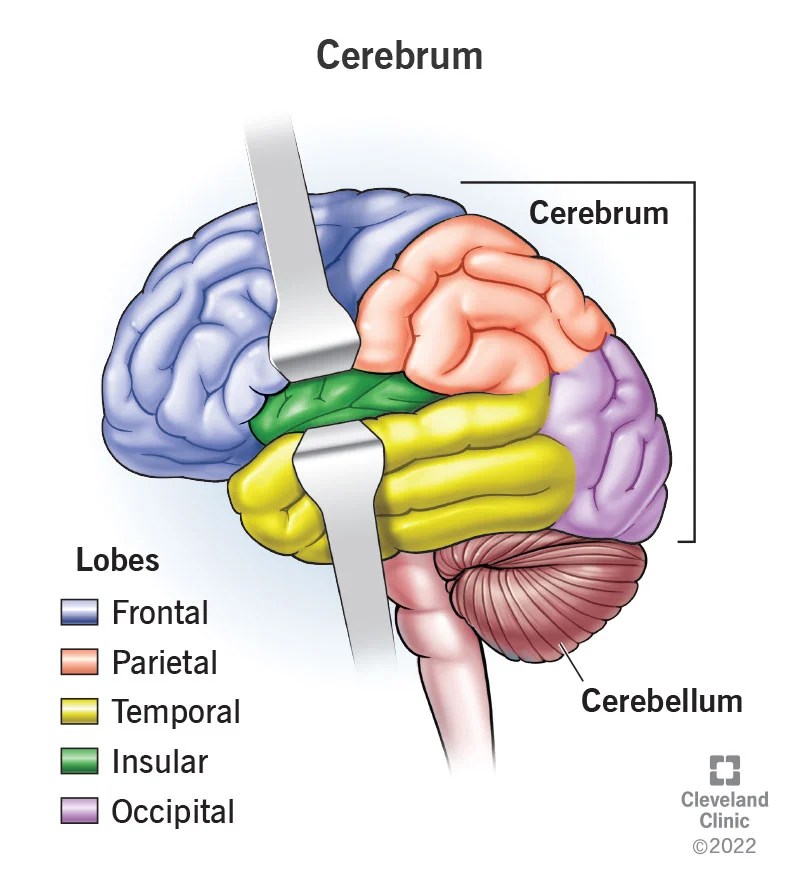
Cerebrum,Your cerebrum is the largest part of your brain and includes parts above and forward of your cerebellum. Your cerebrum is the part of your brain that starts and manages conscious thoughts; meaning, things that you actively think about or do.
There are three main divisions cerebrum, cerebellum, brain stem. The cerebrum consists of two cerebral hemispheres the outer layer called the cortex (gray matter) and the inner layer (white matter). There are four lobes in the cortex, the frontal lobe, parietal lobe, temporal lobe, occipital lobe.
Frontal-Voluntary activities- thinking.
Parental-Feelings like touch hot cold.
Temporal-hearing, talking.
Occipital-light reactions.
Mid Brain
………………
Hypothalamus—
Midbrain, also called mesencephalon, region of the developing vertebrate brain that is composed of the tectum and tegmentum. The midbrain serves important functions in motor movement, particularly movements of the eye, and in auditory and visual processing. It is located within the brainstem and between the two other developmental regions of the brain, the forebrain and the hindbrain; compared with those regions, the midbrain is relatively small.
The tectum (from Latin for “roof”) makes up the rear portion of the midbrain and is formed by two paired rounded swellings, the superior and inferior colliculi. The superior colliculus receives input from the retina and the visual cortex and participates in a variety of visual reflexes, particularly the tracking of objects in the visual field. The inferior colliculus receives both crossed and uncrossed auditory fibres and projects upon the medial geniculate body, the auditory relay nucleus of the thalamus.
Olfactory lobe- hearing
Optical lobe- vision
Hind Brain
………………
Cerebellum & Medula Oblangotta—
The hindbrain (developmentally derived from the rhombencephalon) is one of the three major regions of our brains, located at the lower back part of the brain. It includes most of the brainstem and a dense coral-shaped structure called the cerebellum.
total functions:-
Cerebellum-Body/Posture balance
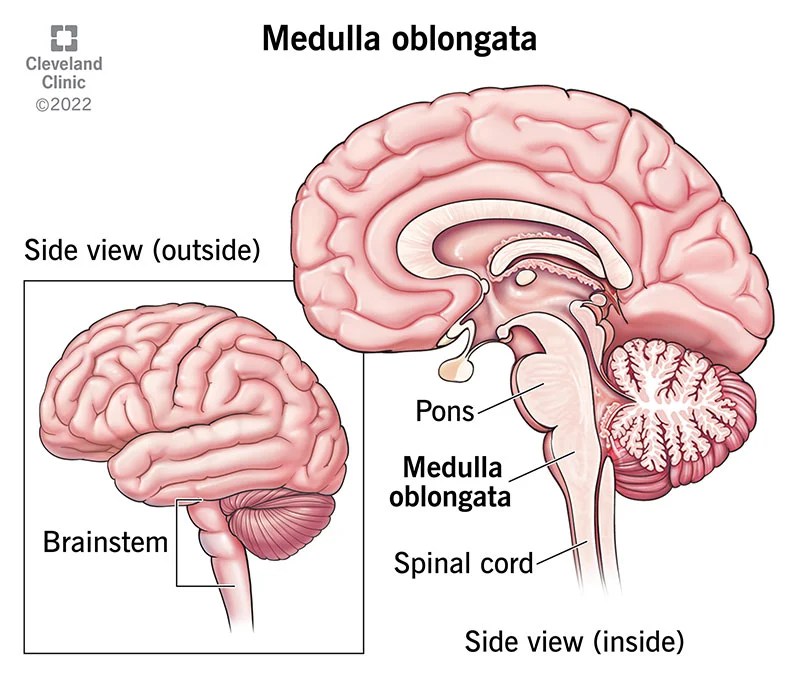
forebrain-Pons -Respiration
hind brain-Medulla- involuntary actions
Pons+medulla= Brain Stem
——————————————-
Function of CNS:-
Brain
———–
Cerebrospinal fluid
Meninges-
Duramater outer meninges
Arechnoid middle meninges
Pismater inner meninges
Spinal cord
——————
Cerebrospinal fluid
Meninges-
Duramater outer meninges
Arechnoid middle meninges
Piamater inner meninges
Reflex arc for skin, eye, ear, nose, tongue.
Reflex action-
Sensory nerve->motor nerve-> SC -> motor nerve-sensory nerve.
——————————————-
 Biology