Great question! The terms cortex and medulla are used in anatomy to describe the outer and inner regions of organs — like the brain, kidneys, adrenal glands, lymph nodes, and more.
🧠 1. Brain
Cortex = Outer layer of the brain (called the cerebral cortex)
Here are 5 key hormones secreted in the brain that are associated with happiness, strength, love, smile, and peace:
—
1. Dopamine – “The Reward Molecule”
Function: Associated with pleasure, motivation, focus, and reward.
Effect: Makes you feel happy, driven, and satisfied after achieving goals.
Secreted in: Substantia nigra and ventral tegmental area (VTA) of the brain.
—
2. Serotonin – “The Mood Stabilizer”
Function: Regulates mood, sleep, appetite, and peacefulness.
Effect: Brings inner calm, contentment, and emotional stability.
Secreted in: Raphe nuclei of the brainstem.
—
3. Oxytocin – “The Love Hormone”
Function: Promotes bonding, trust, affection, and empathy.
Effect: Involved in feelings of love, attachment, and warmth.
Secreted in: Hypothalamus and released by the posterior pituitary.
—
4. Endorphins – “The Natural Painkillers”
Function: Reduce pain and boost pleasure, often released during exercise, laughter, or excitement.
Effect: Responsible for smiles, joy, and feelings of strength and energy.
Secreted in: Pituitary gland and central nervous system.
—
5. GABA (Gamma-Aminobutyric Acid) – “The Calming Agent”
Function: Inhibits neural activity, reduces stress and anxiety, promotes peace.
Effect: Induces a calm and relaxed state.
Secreted in: Various parts of the brain including the thalamus and hypothalamus.
—
🧠 These hormones work together, not in isolation. For example, smiling can boost dopamine and endorphins, while love increases oxytocin. A balanced lifestyle—exercise, meditation, social connection, proper sleep, and gratitude—supports healthy hormone release.
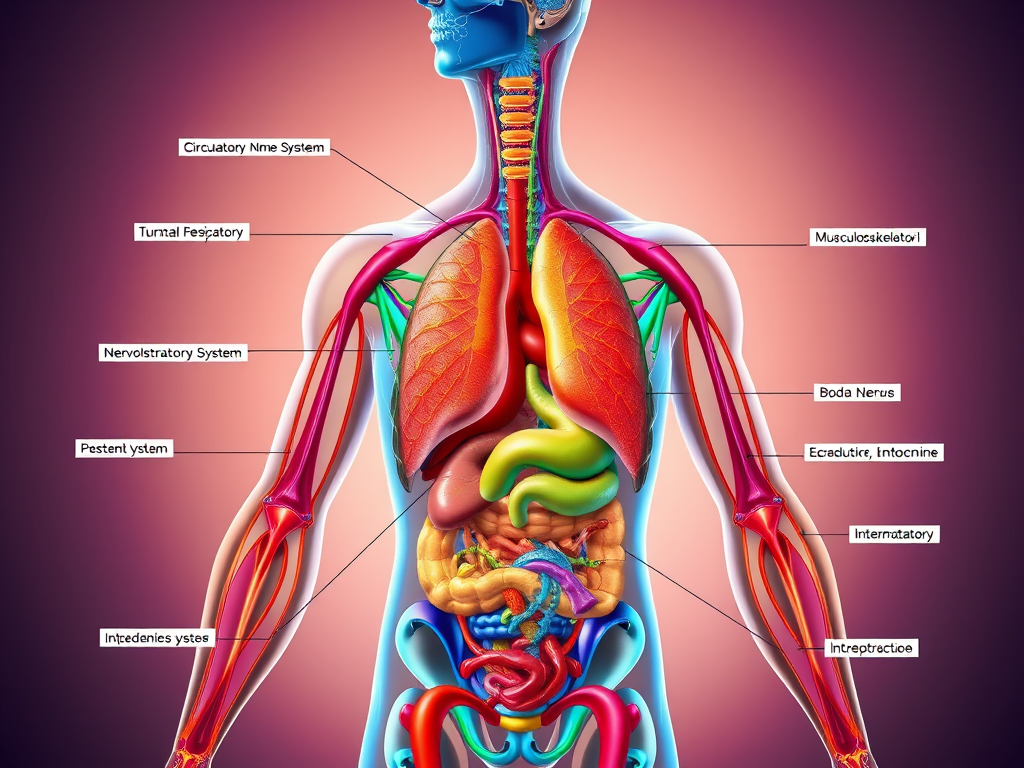
The term “body functions” refers to the physiological activities and processes carried out by the body’s systems to maintain life and health. These functions are regulated by various organs and systems working together. Here’s a breakdown by major body systems:
1. Circulatory System
Function: Transports blood, oxygen, nutrients, and waste products.
Key Processes:
Heartbeat (pumping blood)
Blood pressure regulation
Oxygen and nutrient delivery
Waste removal (CO₂, urea)
2. Respiratory System
Function: Supplies oxygen to the blood and removes carbon dioxide.
Key Processes:
Breathing (inhalation/exhalation)
Gas exchange in lungs
3. Digestive System
Function: Breaks down food into nutrients and absorbs them.
Key Processes:
Ingestion
Digestion (mechanical & chemical)
Absorption of nutrients
Elimination of solid waste
4. Nervous System
Function: Controls and coordinates body activities through electrical signals.
Key Processes:
Sensory perception (sight, sound, touch, etc.)
Thought and memory
Reflex actions
Voluntary/involuntary movement control
5. Musculoskeletal System
Function: Provides support, movement, and protection.
Key Processes:
Muscle contraction
Joint movement
Bone growth and repair
6. Excretory (Urinary) System
Function: Removes waste from the blood and maintains water balance.
Key Processes:
Filtration of blood by kidneys
Urine formation and excretion
7. Endocrine System
Function: Produces hormones that regulate body processes.
Key Processes:
Growth and development
Metabolism
Blood sugar regulation
Reproductive function
8. Reproductive System
Function: Enables reproduction.
Key Processes:
Production of sperm/egg cells
Hormone production
Pregnancy and childbirth (in females)
9. Immune System
Function: Defends against disease and infections.
Key Processes:
Production of white blood cells
Inflammatory response
Antibody production
10. Integumentary System
Function: Protects the body (skin, hair, nails).
Key Processes:
Temperature regulation
Sensation
Barrier against pathogens
Let me know if you’d like a diagram, flashcards, or a version tailored for younger learners.
You said:
Mensural system of human body
ChatGPT said:
It looks like you meant the “menstrual system” of the human body, which is part of the female reproductive system. Here’s a detailed explanation:
🌸 Menstrual System (Menstrual Cycle)
The menstrual system refers to the monthly cycle of hormonal changes that prepare the female body for pregnancy. If pregnancy does not occur, the uterus sheds its lining, leading to menstruation (a period).
🔁 Phases of the Menstrual Cycle
The typical cycle lasts 28 days (can vary from 21–35 days) and includes four main phases:
1. Menstrual Phase (Days 1–5)
What happens: The uterus lining (endometrium) is shed and exits the body through the vagina as blood and tissue.
Hormones involved: Low levels of estrogen and progesterone.
2. Follicular Phase (Days 1–13)
What happens: The pituitary gland releases FSH (follicle-stimulating hormone), stimulating the growth of ovarian follicles.
One follicle becomes dominant and matures into an egg.
Uterine lining starts to rebuild.
Hormones involved: Rising estrogen levels.
3. Ovulation (Around Day 14)
What happens: A surge in LH (luteinizing hormone) causes the ovary to release a mature egg.
This is the most fertile time of the cycle.
Hormones involved: Surge in LH and estrogen.
4. Luteal Phase (Days 15–28)
What happens: The ruptured follicle becomes the corpus luteum, which secretes progesterone.
Progesterone thickens the uterine lining for a possible pregnancy.
If no fertilization occurs, hormone levels drop and the cycle restarts.
Hormones involved:Progesterone, and later dropping estrogen and progesterone if pregnancy doesn’t happen.
🌟 Key Hormones Involved:
FSH (Follicle-Stimulating Hormone)
LH (Luteinizing Hormone)
Estrogen
Progesterone
🩸 What is Menstruation?
Menstruation is the shedding of the uterine lining.
It usually lasts 3–7 days.
Symptoms may include cramps, mood swings, fatigue, and more.
📆 Why is it Important?
The menstrual cycle is crucial for fertility and reproductive health.
Irregularities can signal health conditions like:
PCOS
Thyroid issues
Hormonal imbalances
Would you like a labeled diagram or explanation of what happens during pregnancy or menopause as well?
You said:
somatic cells or somatic cycle what is it?
ChatGPT said:
Great question! Let’s break it down:
🔬 What are Somatic Cells?
Somatic cells are all the cells in the human bodyexcept the reproductive cells (sperm and egg). These are the cells that make up most of your organs, skin, muscles, bones, blood, and more.
Blood is a specialized body fluid that circulates through the cardiovascular system, delivering essential substances such as oxygen and nutrients to cells and removing waste products like carbon dioxide. It also plays vital roles in immune defense, regulation of body temperature, and maintaining homeostasis.
Parts of Blood:
Blood is composed of two main components:
Plasma:
The liquid portion, making up about 55% of blood volume.
Composed of water (90%), electrolytes, nutrients, hormones, waste products, and plasma proteins (e.g., albumin, globulins, and fibrinogen).
Formed Elements (Cells):
Red Blood Cells (Erythrocytes):
Contain hemoglobin, which binds to oxygen and transports it from the lungs to the tissues.
Responsible for the red color of blood.
White Blood Cells (Leukocytes):
Part of the immune system, protecting the body against infections and foreign invaders.
Types include:
Neutrophils: First responders to infection, performing phagocytosis.
Lymphocytes: Include T-cells and B-cells for adaptive immunity.
Monocytes: Become macrophages that engulf pathogens and debris.
Eosinophils: Fight parasitic infections and are involved in allergic reactions.
Basophils: Release histamine and heparin during allergic responses.
Platelets (Thrombocytes):
Cell fragments involved in blood clotting (hemostasis) to prevent bleeding.
Functions of Blood:
Transportation:
Carries oxygen from the lungs to body tissues and carbon dioxide back to the lungs for exhalation.
Transports nutrients from the digestive system to cells.
Delivers hormones from endocrine glands to target organs.
Carries metabolic waste products to the kidneys and liver for excretion.
Regulation:
Maintains body temperature by distributing heat.
Balances pH levels through buffering systems.
Regulates fluid and electrolyte balance in body tissues.
Protection:
Clotting Mechanism: Platelets and plasma proteins (e.g., fibrinogen) form blood clots to prevent excessive bleeding.
Immune Defense: White blood cells defend against pathogens, and antibodies neutralize toxins and harmful microorganisms.
Homeostasis:
Maintains stable internal conditions, supporting cellular function and overall health.
The pituitary gland, often called the “master gland,” is a small, pea-sized endocrine gland located at the base of the brain, within a bony cavity called the sella turcica. It is connected to the hypothalamus by a thin stalk (the pituitary stalk or infundibulum) and plays a crucial role in regulating various bodily functions by releasing hormones that influence growth, metabolism, and reproduction.
Parts of the Pituitary Gland:
Anterior Pituitary (Adenohypophysis):
The larger, front portion that produces and secretes several hormones under the regulation of hypothalamic hormones.
Posterior Pituitary (Neurohypophysis):
The smaller, rear portion that stores and releases hormones produced by the hypothalamus.
Pars Intermedia:
A thin layer between the anterior and posterior lobes that produces melanocyte-stimulating hormone (MSH) in some animals, but is less distinct in humans.
Functions of the Pituitary Gland:
Anterior Pituitary Hormones and Their Functions:
Growth Hormone (GH): Stimulates growth of bones and muscles, and regulates metabolism.
Thyroid-Stimulating Hormone (TSH): Stimulates the thyroid gland to produce thyroid hormones (T3 and T4).
Adrenocorticotropic Hormone (ACTH): Stimulates the adrenal cortex to release cortisol.
Prolactin (PRL): Promotes milk production in mammary glands.
Follicle-Stimulating Hormone (FSH): Regulates the growth of ovarian follicles in females and sperm production in males.
Luteinizing Hormone (LH): Triggers ovulation and estrogen/progesterone production in females, and testosterone production in males.
Posterior Pituitary Hormones and Their Functions:
Antidiuretic Hormone (ADH or Vasopressin): Regulates water balance by promoting water reabsorption in the kidneys.
Oxytocin: Stimulates uterine contractions during childbirth and milk ejection during breastfeeding.
Overall Role in the Body:
The pituitary gland coordinates with the hypothalamus to maintain homeostasis by regulating:
The intestine is a long, tubular organ in the digestive system that extends from the stomach to the anus. It is responsible for the digestion and absorption of nutrients, as well as the elimination of waste. It is divided into two main sections: the small intestine and the large intestine.
Parts of the Intestine:
Small Intestine:
Duodenum:
The first and shortest segment, where digestive enzymes from the pancreas and bile from the liver mix with chyme from the stomach.
Jejunum:
The middle section, specialized in the absorption of nutrients like carbohydrates, proteins, and fats.
Ileum:
The last portion, which absorbs vitamin B12, bile salts, and any remaining nutrients before passing the contents to the large intestine.
Large Intestine:
Cecum:
A pouch-like beginning connected to the ileum; contains the appendix.
Colon:
Ascending Colon: Travels upward on the right side of the abdomen.
Transverse Colon: Crosses the abdomen horizontally.
Descending Colon: Travels downward on the left side.
Sigmoid Colon: S-shaped curve leading to the rectum.
Rectum:
Stores feces before elimination.
Anus:
The exit point for waste, controlled by the internal and external anal sphincters.
Functions of the Intestine:
Small Intestine Functions:
Digestion:
Completes chemical digestion using enzymes from the pancreas and bile from the liver.
Absorption:
Absorbs nutrients (carbohydrates, proteins, fats, vitamins, and minerals) through the villi and microvilli lining the intestinal walls.
Immune Defense:
Contains Peyer’s patches (lymphoid tissues) that protect against harmful bacteria.
Large Intestine Functions:
Water and Electrolyte Absorption:
Absorbs water and electrolytes, turning liquid chyme into solid feces.
Bacterial Fermentation:
Hosts beneficial bacteria that ferment undigested carbohydrates and produce vitamins (e.g., vitamin K and B vitamins).
Formation and Storage of Feces:
Compacts waste material into feces and stores it in the rectum.
The stomach is a muscular, hollow organ located in the upper abdomen, between the esophagus and the small intestine. It plays a vital role in the digestive system by breaking down food through mechanical movements and chemical secretions, preparing it for nutrient absorption in the small intestine.
Parts of the Stomach:
Cardia:
The upper portion where food enters from the esophagus through the lower esophageal sphincter.
Fundus:
The rounded, dome-shaped section above the cardia, which stores undigested food and gases released during digestion.
Body (Corpus):
The largest central section where most of the digestive mixing occurs.
Antrum (Pyloric Antrum):
The lower portion that grinds food and regulates the passage of digested contents to the small intestine.
Pylorus:
The narrow region that connects to the small intestine through the pyloric sphincter, controlling the release of chyme into the duodenum.
Sphincters:
Lower Esophageal Sphincter: Prevents backflow of stomach contents into the esophagus.
Pyloric Sphincter: Regulates the movement of food into the small intestine.
Functions of the Stomach:
Mechanical Digestion:
Churning and mixing food with gastric juices to form a semi-liquid mixture called chyme.
Chemical Digestion:
Secretes hydrochloric acid (HCl) to:
Break down food.
Kill harmful bacteria.
Activate the enzyme pepsin.
Produces digestive enzymes like pepsin for protein digestion.
Storage:
Temporarily stores ingested food and regulates its release into the small intestine.
Absorption:
Limited absorption occurs in the stomach, mainly for water, alcohol, and certain medications.
Protection:
Mucus secretion protects the stomach lining from self-digestion by hydrochloric acid.
Hormone Production:
Releases gastrin, a hormone that stimulates gastric acid production.
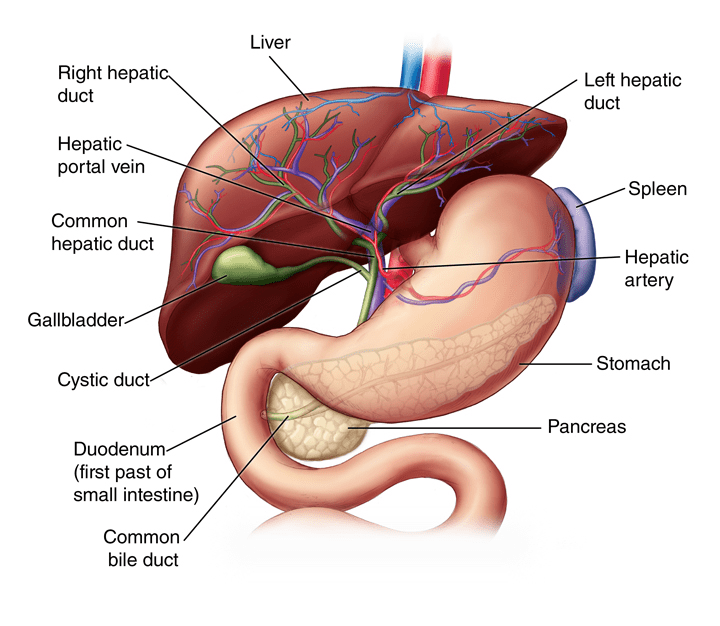
The liver is a large, reddish-brown organ located in the upper right quadrant of the abdomen, beneath the diaphragm and above the stomach. It is the largest internal organ and gland in the human body and plays a crucial role in various metabolic, detoxification, and regulatory processes.
Parts of the Liver:
Lobes:
Right Lobe: The larger lobe, occupying most of the liver’s volume.
Left Lobe: Smaller and more flattened compared to the right lobe.
Caudate Lobe: Positioned on the posterior side near the inferior vena cava.
Quadrate Lobe: Located near the gallbladder.
Blood Supply:
Hepatic Artery: Supplies oxygen-rich blood from the heart.
Portal Vein: Carries nutrient-rich blood from the digestive organs.
Bile Duct System:
Hepatic Ducts: Drain bile from the liver.
Common Bile Duct: Transports bile to the small intestine.
Microscopic Structure:
Lobules: Functional units made of hepatocytes (liver cells).
Sinusoids: Capillary spaces for blood flow within the lobules.
Kupffer Cells: Specialized macrophages for immune defense.
Functions of the Liver:
Metabolism:
Carbohydrate metabolism: Maintains blood glucose levels by storing glycogen and releasing glucose.
Lipid metabolism: Breaks down fats and produces cholesterol and lipoproteins.
Protein metabolism: Synthesizes plasma proteins (e.g., albumin) and urea.
Detoxification:
Neutralizes toxins, drugs, and metabolic waste products.
Converts ammonia (toxic) into urea, which is excreted by the kidneys.
Storage:
Stores vitamins (A, D, E, K, and B12), iron, and glycogen.
Digestion:
Produces bile, which emulsifies fats for digestion in the small intestine.
Immune Function:
Kupffer cells in the liver remove bacteria and worn-out blood cells.
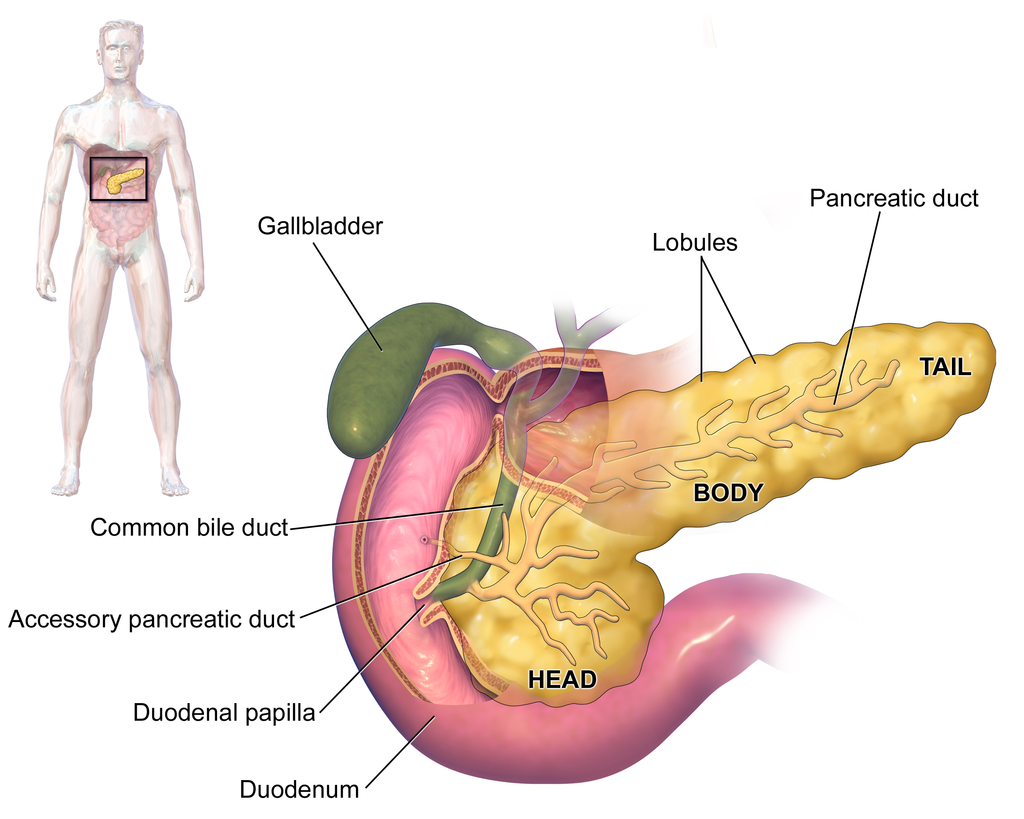
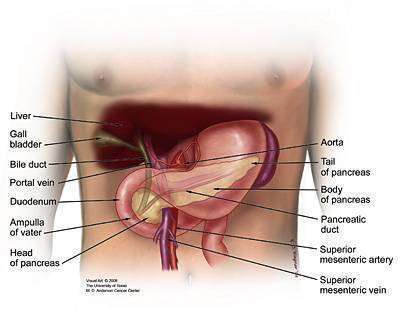
Pancreas is a vital organ that’s crucial for both digestion and blood sugar regulation.
Location and Structure: The pancreas is located in the upper abdomen, behind the stomach and between the duodenum (first part of small intestine) and spleen. It’s about 6 inches long and has three main parts:
Head: The widest part, nestled in the curve of the duodenum
Body: The middle portion
Tail: The narrow end that extends toward the spleen
 Human Body