Pancreas is a vital organ that’s crucial for both digestion and blood sugar regulation.
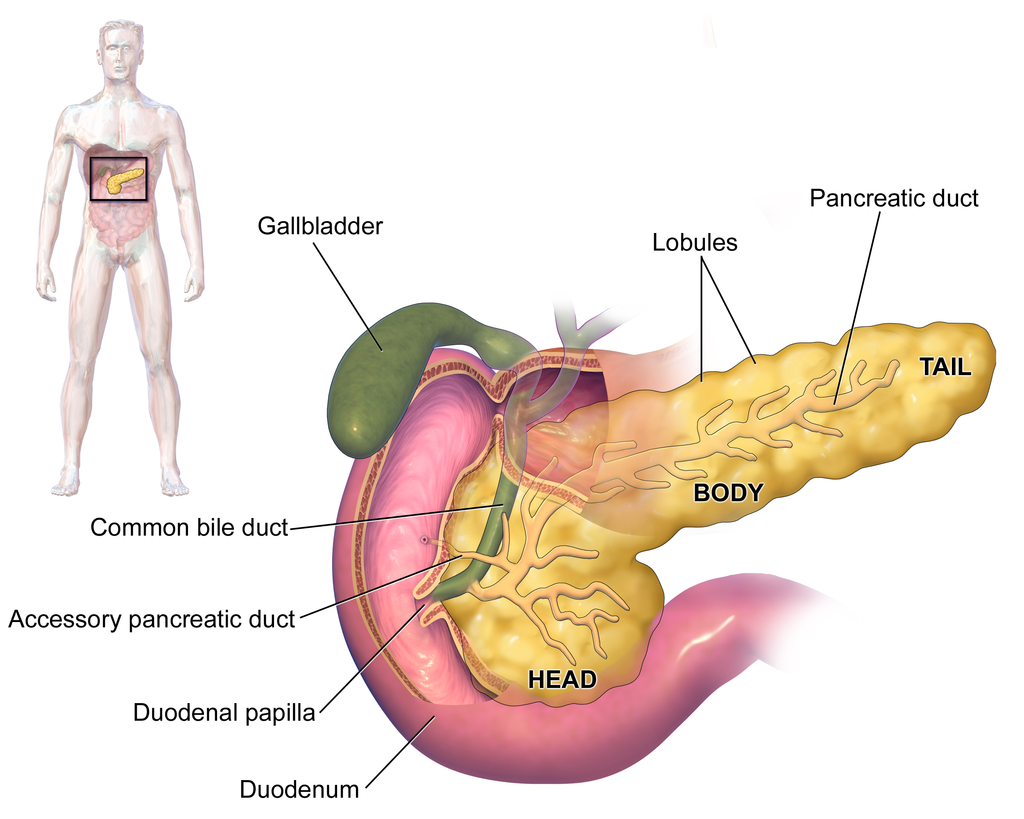
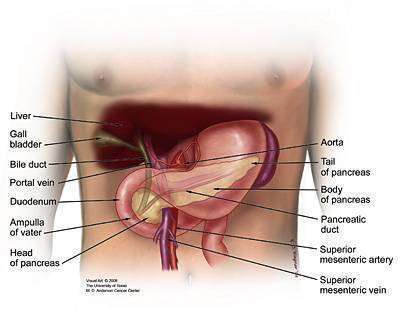
Location and Structure: The pancreas is located in the upper abdomen, behind the stomach and between the duodenum (first part of small intestine) and spleen. It’s about 6 inches long and has three main parts:
- Head: The widest part, nestled in the curve of the duodenum
- Body: The middle portion
- Tail: The narrow end that extends toward the spleen
Functions:
- Endocrine Function (Hormone Production):
- Produces insulin (beta cells) – lowers blood sugar
- Produces glucagon (alpha cells) – raises blood sugar
- Produces somatostatin (delta cells) – regulates other hormones
- Produces pancreatic polypeptide (PP cells) – helps regulate digestion
- Exocrine Function (Digestive Enzymes): The pancreas produces important digestive enzymes including:
- Amylase: breaks down carbohydrates
- Lipase: breaks down fats
- Proteases: break down proteins
- Nucleases: break down nucleic acids
These enzymes flow through the pancreatic duct into the small intestine to aid digestion.
Common Pancreatic Conditions:
- Pancreatitis (inflammation)
- Type 1 and Type 2 diabetes (affecting insulin production/function)
- Pancreatic cancer
- Cystic fibrosis (affecting enzyme production)
Size and Appearance:
- The pancreas is an elongated organ, approximately 12-15 centimeters (4.7-5.9 inches) long
- It weighs about 60-70 grams (2.1-2.5 ounces) in adults
- The color is pinkish-gray, with a soft, lobulated texture
- It has a thin capsule surrounding it that contains connective tissue
Main Anatomical Parts:
- Head
- Largest and widest part, located on the right side
- Fits into the C-shaped curve of the duodenum
- Contains the uncinate process, a hook-like projection
- Has the most concentration of pancreatic islets (hormone-producing cells)
- Neck
- Short, constricted portion connecting head to body
- Contains the main pancreatic blood vessels
- Lies in front of important blood vessels (portal vein and superior mesenteric artery)
- Body
- Middle portion, extends across the midline
- Lies behind the stomach
- Has a triangular cross-section
- Tail
- Narrow, left end of the pancreas
- Extends toward the spleen
- Contains a high concentration of insulin-producing cells
Ductal System:
- Main pancreatic duct (Duct of Wirsung): Runs the length of the pancreas
- Accessory pancreatic duct (Duct of Santorini): Present in about 60% of people
- These ducts join to empty into the duodenum via the ampulla of Vater
Blood Supply:
- Head: Superior pancreaticoduodenal artery and inferior pancreaticoduodenal artery
- Body and tail: Splenic artery via multiple small branches
Microscopic Structure:
- Exocrine tissue (98%): Clustered into acini that produce digestive enzymes
- Endocrine tissue (2%): Forms the islets of Langerhans, producing hormones
 Human Body