What is reproduction?
Reproduction is the biological process by which living organisms produce new individuals of the same species. It is a fundamental characteristic of all life forms and is essential for the continuation of a species. Reproduction serves to pass on genetic information from one generation to the next, ensuring the survival and genetic diversity of a species.
————————————————————————————-
There are two primary modes of reproduction:
ASEXUAL REPRODUCTION
SEXUAL REPRODUCTION
————————————————————————————–
Asexual Reproduction: In asexual reproduction, a single parent organism gives rise to one or more offspring without the involvement of gametes (sperm and egg cells) or the fusion of genetic material from two parents. Asexual reproduction results in offspring that are genetically identical or nearly identical to the parent.
Common methods of asexual reproduction include:-
Binary fission: The parent cell divides into two equal daughter cells, as seen in bacteria and some single-celled organisms.
Budding: A small outgrowth or bud forms on the parent organism and eventually detaches to become a new individual, as observed in yeast and some animals.
Fragmentation: An organism breaks into fragments, and each fragment can regenerate into a new individual. This is common in some plants and invertebrates.
Parthenogenesis: An unfertilized egg develops into an offspring, typically in certain insects, reptiles, and amphibians.
————————————————————————————–
Sexual Reproduction: Sexual reproduction involves the fusion of specialized reproductive cells called gametes, typically a sperm cell from a male and an egg cell from a female. This fusion creates a genetically unique offspring that inherits a combination of genetic material from both parents. Sexual reproduction contributes to genetic diversity within a species, which can be advantageous for adaptation and evolution. Sexual reproduction is common in most animals, many plants, and some fungi.
Reproduction is essential for the following reasons:-
Continuation of the Species: Reproduction ensures that a species persists over time by producing new generations of individuals.
Genetic Variation: Sexual reproduction introduces genetic diversity into populations, which can enhance the species’ ability to adapt to changing environments and increase its chances of survival.
Repair and Growth: In multicellular organisms, reproduction is necessary for the growth of the organism, tissue repair, and the replacement of damaged or dying cells.
Evolution: Reproduction, particularly sexual reproduction and the genetic diversity it generates, is a driving force in evolution. It allows for the accumulation of advantageous traits and the elimination of detrimental ones over time.
Different species employ various reproductive strategies and mechanisms to suit their ecological niches and survival strategies. Reproduction can range from simple and asexual in some organisms to complex and sexual in others, reflecting the incredible diversity of life on Earth.
——————————————————————–
Two types of Cell divisions involved in Sexual reproduction:-
Mitosis & Meiosis.
What is mitosis and meiosis?
Mitosis and meiosis are two distinct processes of cell division, each serving specific purposes in the life cycles of organisms.
——————————————-
Mitosis
——————————————-
What is mitosis?
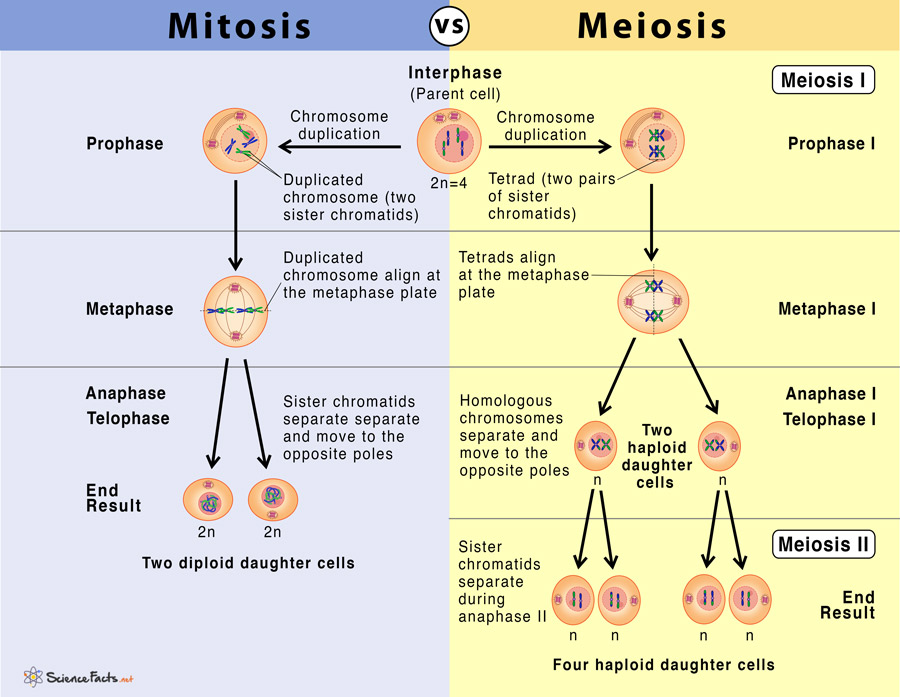
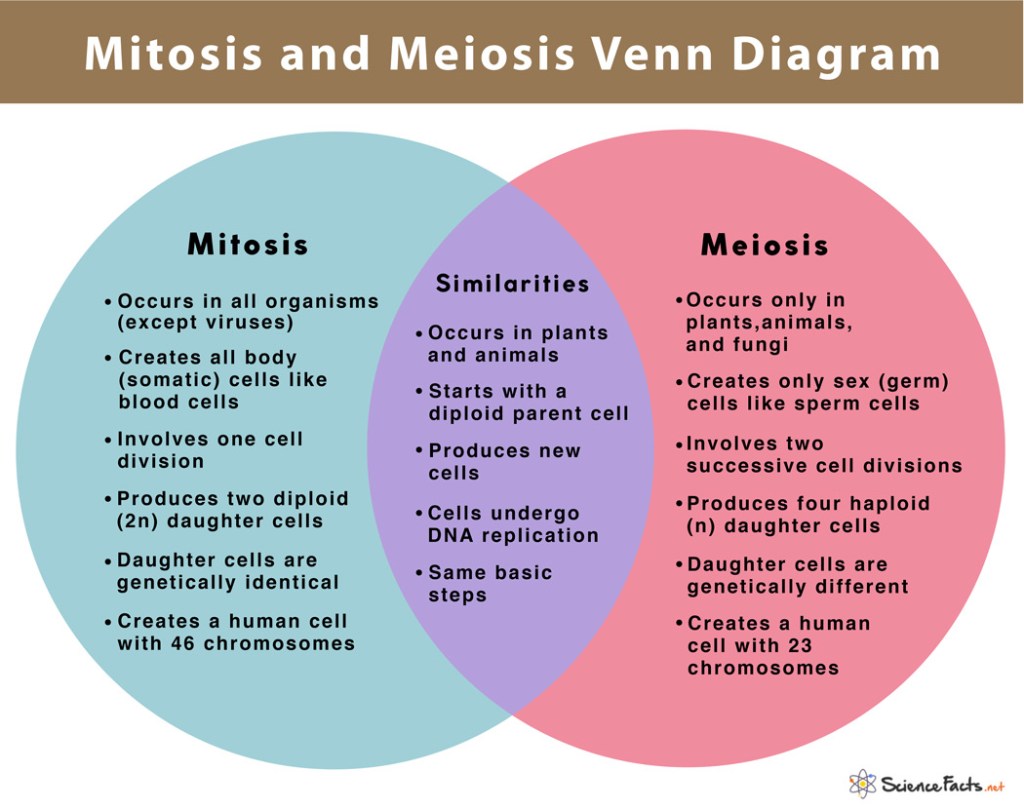
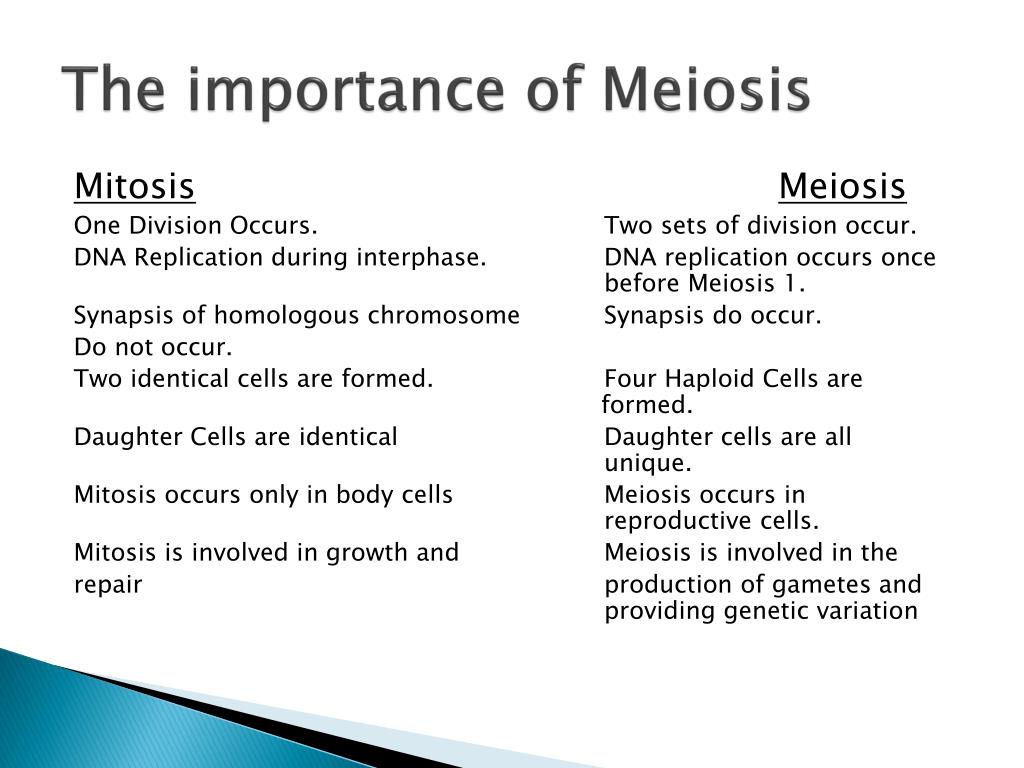
Mitosis is a type of cell division that occurs in somatic (body) cells of multicellular organisms. It is responsible for the growth, repair, and maintenance of tissues, as well as for asexual reproduction in some organisms. Mitosis results in the formation of two genetically identical daughter cells, each with the same number of chromosomes as the parent cell.
The process of mitosis consists of several distinct stages:
——————————————
Interphase: Before mitosis begins, the cell goes through a phase called interphase. This is the period when the cell carries out its normal functions and prepares for cell division. During interphase, the cell undergoes three subphases:
G1 (Gap 1): The cell grows, and various metabolic activities occur.
Prophase: Mitosis begins with prophase. During this stage:
Chromosomes condense and become visible as distinct, tightly coiled structures.
The nuclear envelope begins to break down, allowing the spindle fibers to interact with the chromosomes.
Microtubules called spindle fibers start to form and extend from the centrosomes, which are specialized regions near the cell’s nucleus.
Metaphase: During metaphase:
Chromosomes line up along the cell’s equator, known as the metaphase plate.
Each chromosome is attached to spindle fibers at its centromere.
Anaphase: In anaphase:
The sister chromatids (identical copies of a chromosome) are pulled apart by the shortening of the spindle fibers.
Each chromatid, now considered an individual chromosome, is drawn toward opposite poles of the cell.
Telophase: Telophase marks the near-end of mitosis:
Chromatids, now separated, reach the opposite poles and begin to de-condense back into long, thread-like structures.
The nuclear envelope starts to reform around each set of chromosomes, resulting in the formation of two distinct nuclei within the cell.
Cytokinesis: Often considered as a separate process from mitosis, cytokinesis is the division of the cytoplasm and other organelles between the two daughter cells. In animal cells, a contractile ring of actin filaments pinches the cell’s membrane, leading to the separation of the cell into two distinct daughter cells. In plant cells, a new cell wall is constructed down the middle.
S (Synthesis): DNA replication takes place, resulting in the duplication of each chromosome. By the end of this phase, the cell has twice the amount of DNA it initially had.
G2 (Gap 2): The cell continues to grow and prepare for mitosis.
After mitosis and cytokinesis are complete, each of the two daughter cells is genetically identical to the original parent cell and contains the same number of chromosomes. Mitosis ensures that cells maintain their chromosome number and genetic integrity, allowing for growth, tissue repair, and the replacement of damaged or dying cells in multicellular organisms.
—————————————————————–
Meiosis
—————————————————————–
What is meiosis?
Meiosis is a specialized type of cell division that occurs in sexually reproducing organisms, resulting in the formation of haploid gametes (sperm and egg cells in animals) or spores (in some plants and fungi). It is a crucial process in sexual reproduction because it reduces the chromosome number by half, ensuring that when gametes fuse during fertilization, the resulting zygote has the correct diploid chromosome number.
Meiosis involves two sequential divisions: meiosis I and meiosis II. Each of these divisions includes specific stages, similar to the stages in mitosis (another type of cell division), but with some key differences. Here’s an overview of meiosis:
Meiosis I: Reduction Division Meiosis I is the first division in meiosis and involves the following stages:
Prophase I: This is the longest and most complex stage of meiosis. During prophase I, homologous chromosomes (chromosomes with the same genes but potentially different alleles) pair up through a process called synapsis. This pairing is known as a tetrad. Crossing over occurs during prophase I, where sections of chromatids are exchanged between homologous chromosomes. This genetic recombination creates genetic diversity. At the end of prophase I, the nuclear envelope breaks down.
Metaphase I: The tetrads align at the cell’s equatorial plane (the metaphase plate), with each homologous chromosome attached to spindle fibers. The arrangement of chromosomes at this stage is random, contributing to genetic diversity.
Anaphase I: Homologous chromosomes are pulled apart and move to opposite poles of the cell. Unlike mitosis, sister chromatids remain attached at this stage.
Telophase I and Cytokinesis: The separated homologous chromosomes arrive at opposite poles of the cell, and the cell undergoes cytokinesis, splitting into two daughter cells. These daughter cells are haploid, meaning they have half the chromosome number of the original cell but still consist of sister chromatids.
Meiosis II: Equational Division Meiosis II is similar to mitosis and serves to separate the sister chromatids produced in meiosis I. It includes the following stages:
Prophase II: If a nuclear envelope formed during interkinesis (the brief resting phase between meiosis I and meiosis II), it breaks down again. Chromosomes condense, and spindle fibers form in each of the two haploid daughter cells from meiosis I.
Metaphase II: Individual chromosomes line up at the metaphase plate in both haploid daughter cells.
Anaphase II: Sister chromatids are finally separated and move to opposite poles of the cells.
Telophase II and Cytokinesis: A nuclear envelope forms around the separated chromatids in each haploid daughter cell. Cytokinesis occurs, resulting in the formation of a total of four haploid gametes or spores, each with a unique combination of genetic material due to the earlier crossing over events.
Meiosis plays a vital role in maintaining genetic diversity within a population, as it generates genetically distinct gametes or spores with unique combinations of alleles. When two gametes fuse during fertilization, the resulting zygote will have a diverse genetic makeup, contributing to the genetic variability seen in offspring.
 Human Body