Ribonucleic acid (abbreviated RNA) is a nucleic acid present in all living cells that has structural similarities to DNA. Unlike DNA, however, RNA is most often single-stranded. An RNA molecule has a backbone made of alternating phosphate groups and the sugar ribose, rather than the deoxyribose found in DNA.
What is RNA and its function?
Function. The primary function of RNA is to create proteins via translation. RNA carries genetic information that is translated by ribosomes into various proteins necessary for cellular processes. mRNA, rRNA, and tRNA are the three main types of RNA involved in protein synthesis.
What is difference RNA and DNA?
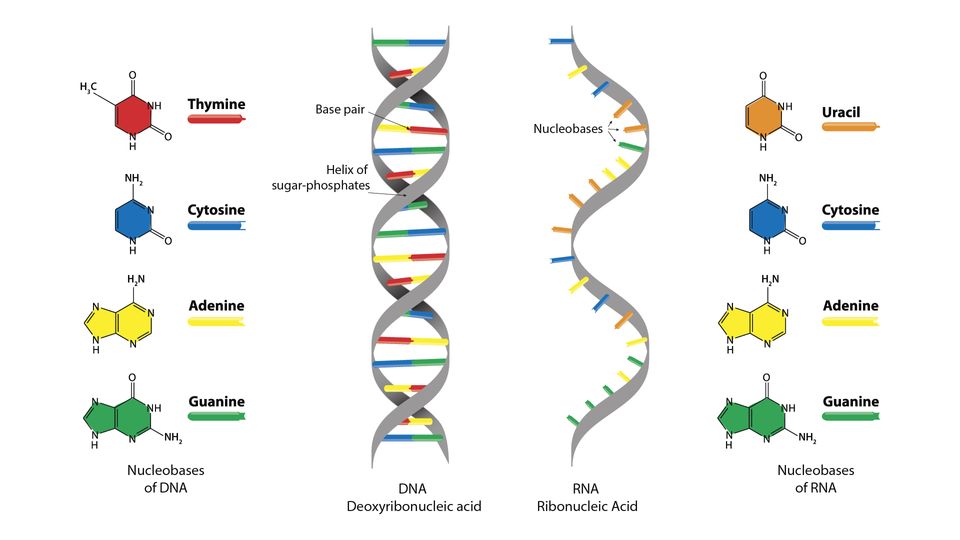
DNA is double-stranded, forming a double helix, while RNA is usually single-stranded. The sugar in DNA is deoxyribose, whereas RNA contains ribose. Furthermore, DNA uses the bases adenine, thymine, cytosine, and guanine, while RNA uses adenine, uracil, cytosine, and guanine.
- Facilitate the translation of DNA into proteins
- Functions as an adapter molecule in protein synthesis
- Serves as a messenger between the DNA and the ribosomes.
- They are the carrier of genetic information in all living cells
- Promotes the ribosomes to choose the right amino acid which is required in building up of new proteins in the body.
RNA Types
There are various types of RNA, out which most well-known and most commonly studied in the human body are :
- tRNA – Transfer RNA
The transfer RNA is held responsible for choosing the correct protein or the amino acids required by the body in-turn helping the ribosomes. It is located at the endpoints of each amino acid. This is also called as soluble RNA and it forms a link between the messenger RNA and the amino acid.
- rRNA-Ribosomal RNA
The rRNA is the component of the ribosome and are located within the in the cytoplasm of a cell, where ribosomes are found. In all living cells, the ribosomal RNA plays a fundamental role in the synthesis and translation of mRNA into proteins. The rRNA is mainly composed of cellular RNA and are the most predominant RNA within the cells of all living beings.
- mRNA – Messenger RNA.
This type of RNA functions by transferring the genetic material into the ribosomes and pass the instructions about the type of proteins, required by the body cells. Based on the functions, these types of RNA is called the messenger RNA. Therefore, the mRNA plays a vital role in the process of transcription or during the protein synthesis process.
Protein Synthesis – Central Dogma
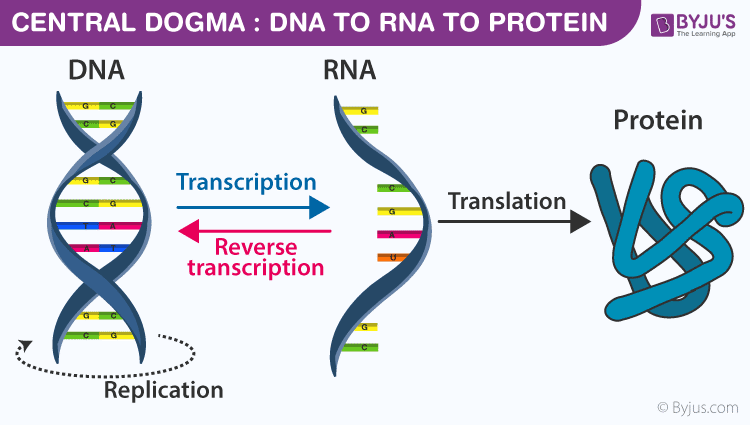
The central dogma describes how the DNA makes its own copies by DNA replication, then codes for the RNA by means of a transcription and RNA codes for the proteins by translation.
For the creation of a new generation, the genetic information stored in the DNA has to be transferred from one generation to another. The process begins with the replication of DNA followed by transcription and translation. Let us have a discussion on translation viz. protein synthesis in cell and the structure of tRNA.
 Human Body