Blood is a body fluid in the circulatory system of humans and other vertebrates that delivers necessary substances such as nutrients and oxygen to the cells
Karl Landsteiner. Father of blood grouping and immunochemistry.
The breakthrough came when Karl Landsteiner, an Austrian scientist, discovered three human blood groups. These were the A, B and O blood groups. For this discovery he was awarded the Nobel Prize for medicine in 1930.
Your blood is made up of liquid and solids. The liquid part, called plasma, is made of water, salts, and protein. Over half of your blood is plasma. The solid part of your blood contains red blood cells, white blood cells, and platelets. Red blood cells (RBC) deliver oxygen from your lungs to your tissues and organs.
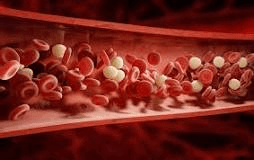
Blood brings oxygen and nutrients to all the parts of the body so they can keep working. Blood carries carbon dioxide and other waste materials to the lungs, kidneys, and digestive system to be removed from the body. Blood also fights infections, and carries hormones around the body.
The new group is called the Er blood group. According to a study in the journal “Blood,” there are now a total of five Er antigens in this group based on genetic variations. The blood type can cause immune cells to attack mismatched cells, which has happened in other cases where blood types are incompatible. year 2023.
Is blood is an Organ? Answer:- Blood is connective tissue, not an organ.
There are three main types of cells in your blood – red blood cells, white blood cells and platelets.
While the primary function of the platelet is thought to be hemostasis, thrombosis, and wound healing through a complex activation process leading to integrin activation and formation of a “core” and “shell” at the site of injury, other physiological roles for the platelet exist including immunity and communication .
Certain types of anemia. Viral infections (chickenpox, hepatitis C, HIV, etc.) Chemotherapy drugs. Heavy alcohol consumption….cause lessening of platelets.
Smallest cell is mycoplasma. Largest cell is neuron.
There are 4 main blood groups (types of blood) – A, B, AB and O. Your blood group is determined by the genes you inherit from your parents.
One of the world’s rarest blood types is one named Rh-null. This blood type is distinct from Rh negative since it has none of the Rh antigens at all. There are less than 50 people who have this blood type. It is sometimes called “golden blood.” It is the purest blood.
AB negative is the rarest of the eight main blood types – just 1% of our donors have it. Despite being rare, demand for AB negative blood is low and we don’t struggle to find donors with AB negative blood. However, some blood types are both rare and in demand.
Normal human RBCs have a biconcave shape, their diameter is about 7-8 µm, and their thickness is about 2.5 µm [11,12,34].
RBCs contain hemoglobin (say: HEE-muh-glow-bin), a protein that carries oxygen. Blood gets its bright red color when hemoglobin picks up oxygen in the lungs. As the blood travels through the body, the hemoglobin releases oxygen to the different body parts.
The seeds of pomegranate are packed with iron and can improve blood counts tremendously. Pomegranate is now prescribed as a fruit that has to be consumed regularly if platelet counts have to be increased.
Blood contains many types of cells: white blood cells (monocytes, lymphocytes, neutrophils, eosinophils, basophils, and macrophages), red blood cells (erythrocytes), and platelets.
How many cells are in human blood? Ans: Red blood cells (RBCs) are by far the most abundant type of cell in the human body, accounting for over 80 percent of all cells. Adult humans have somewhere around 25 trillion RBCs in their body, on average.
Red blood cells transport oxygenAlso known as erythrocytes, RBCs are the most common type of cell found in the blood, with each cubic millimeter of blood containing 4-6 million cells.
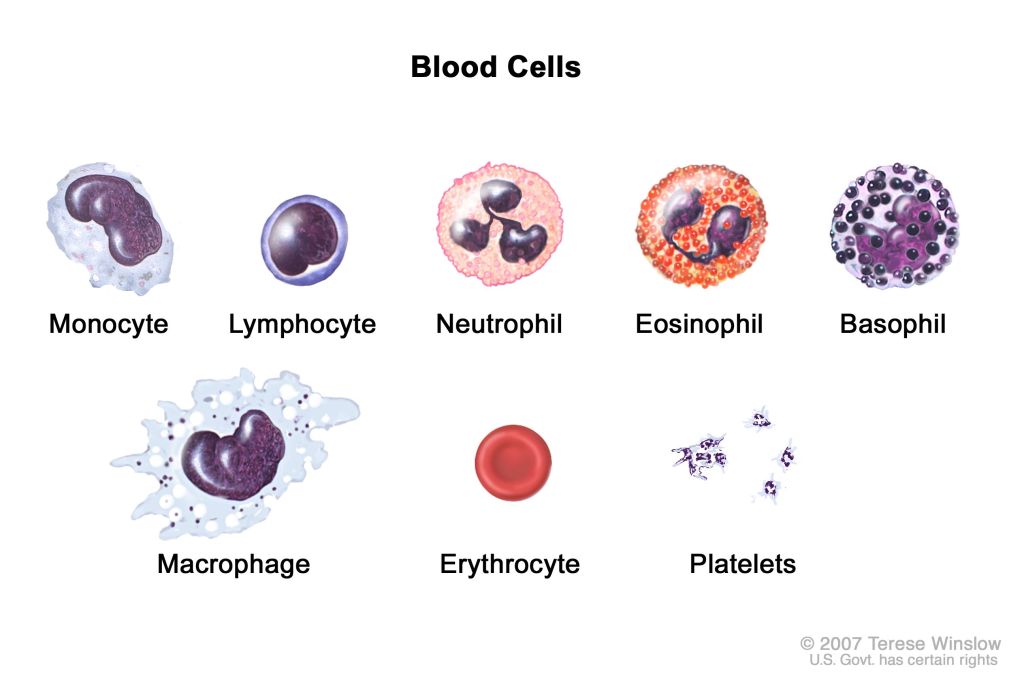
Monocytes are the largest cells of the blood (averaging 15–18 μm in diameter), and they make up about 7 percent of the leukocytes.
Platelets are the smallest of the three major types of blood cells. Platelets are only about 20% of the diameter of red blood cells. The normal platelet count is 150,000-350,000 per microliter of blood, but since platelets are so small, they make up just a tiny fraction of the blood volume.
With a lifespan of about 8–10 days, platelets are continuously generated from bone marrow megakaryocytes which release platelets into the bloodstream to maintain levels of 150,000–400,000 platelets per microliter of blood.
Blood plasma is the yellow liquid component of blood, in which the blood cells in whole blood are normally suspended. The color of the plasma varies considerably from one sample to another from barely yellow to dark yellow and sometimes with a brown, orange or green tinge
Red blood cells are formed in the red bone marrow of bones. Stem cells in the red bone marrow are called hemocytoblasts. They give rise to all of the formed elements in blood. If a stem cell commits to becoming a cell called a proerythroblast, it will develop into a new red blood cell.
Darkened blood color is often observed in critically ill patients generally because of decreased oxygen saturation, but little is known about the other factors responsible for the color intensity.
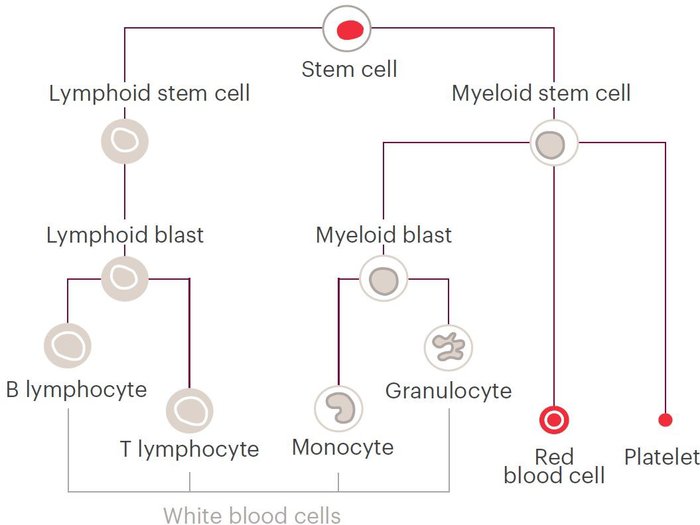
The bone marrow produces stem cells, the building blocks that the body uses to make the different blood cells – red cells, white cells and platelets.
Blood is always red. Blood that has been oxygenated (mostly flowing through the arteries) is bright red and blood that has lost its oxygen (mostly flowing through the veins) is dark red. Anyone who has donated blood or had their blood drawn by a nurse can attest that deoxygenated blood is dark red and not blue.
Blood cells are made in the bone marrow. The bone marrow is the soft, spongy material in the center of the bones. It produces about 95% of the body’s blood cells. Most of the adult body’s bone marrow is in the pelvic bones, breast bone, and the bones of the spine.
Type O negative red blood cells are considered the safest to give to anyone in a life-threatening emergency or when there’s a limited supply of the exact matching blood type. That’s because type O negative blood cells don’t have antibodies to A, B or Rh antigens.
The oldest of the blood types, Type O traces as far back as the human race itself. With primal origins based in the survival and expansion of humans and their ascent to the top of the food chain, it’s no wonder Blood Type O genetic traits include exceptional strength, a lean physique and a productive mind.
Monocytes are the largest type of WBCs while lymphocytes are smallest.
Monocytes are the largest cells of the blood (averaging 15–18 μm in diameter), and they make up about 7 percent of the leukocytes. The nucleus is relatively big and tends to be indented or folded rather than multilobed.
Smallest RBC-The granule cell of the cerebellum is the smallest cell in the body. It measures between 4 and 4.5 micrometers in length. The dimensions of the RBC were also found to be around 5 micrometers.The smallest blood cells are platelets. The diameter of platelets is only about 20% of the diameter of red blood cells. Platelets are very small irregularly shaped fragments of cytoplasm which are derived from the fragmentation of megakaryocytes of the bone marrow and then enter the circulation system.Spleen is known as the RBC graveyard. RBCs are destroyed in the spleen. In one second, approximately 2.5 million RBCs are destroyed.A “unit” of blood is 525 milliliters — about a pint. The average blood transfusion requires about three units.Red cells are stored in refrigerators at 6ºC for up to 42 days. Platelets are stored at room temperature in agitators for up to five days. Plasma and cryo are frozen and stored in freezers for up to one year.
Blood is made up of about 55% blood plasma and about 45% different types of blood cells. Blood plasma is a light yellow, slightly cloudy liquid. Over 90% of blood plasma is water, while less than 10% consists of dissolved substances, mostly proteins.
Well, there is no problem in marrying a spouse having the same blood group. In this universe, every person is born with a specific blood group – Rh positive or Rh negative. Rh negative is quite rare compared to Rh positive.Do blood transfusions change your DNA? No, receiving a donation does not alter the patient’s DNA. Interestingly, though, in most people, it is possible to detect a very small amount of the donor’s DNA in the recipient’s blood for a few days after the transfusion.
adult will have approximately 1.2-1.5 gallons (or 10 units) of blood in their body. Blood is approximately 10% of an adult’s weight.
Which blood group people are smartest? According to the study, the blood type (AB) had the highest average on the IQ test and the greatest grade point average.
Platelets, or thrombocytes, are small, colorless cell fragments in our blood that form clots and stop or prevent bleeding.
—————————————
There are 5 main Rh antigens on red cells – C, c, D, E, e.
The most important of these is the Rh D. Having the D antigen on the red cell gives you the positive (+) and lacking it gives you the negative (-) after the letter A, B, AB or O.
The D antigen is the most immunogenic, meaning it provokes an immune response that makes it most likely to cause a transfusion reaction in the recipient.
To prevent unwanted transfusion reactions and production of alloantibody, Rh D negative girls and women of child bearing potential should not be transfused with Rh D positive red cells except in an emergency.
Alloantibody produced by transfusion of Rh D positive blood to Rh D negative women, or as a result of specific events during pregnancy, can cause Haemolytic Disease of the Fetus and Newborn (HDFN).
HDFN occurs when, either during a previous transfusion or a previous pregnancy, alloantibody in the mother’s blood crosses the placenta, binding to the fetal red cells. This breaks down the fetal red blood cells causing anaemia, referred to as haemolytic anaemia.
77% of our donors have the D antigen on their red blood cells and are D positive.
The remaining 23% lack the D antigen and are D negative. (Source – NHS Blood and Transplant; Active Donor Base December 2016).
As well as D the Rh blood group system also has CE genes.
CE produces four combinations; ce, Ce, cE or CE
The most frequently occurring phenotypes of Rh CE and Rh D are Dce, cde, DCe, dCe, DcE, dcE, DCE and dCE.
Sometimes we will communicate specifically with groups of donors who have specific phenotypes such as those who have the Dce or the ‘Ro’ subtype or phenotype. While Ro blood is rare among white European people, it is much more common among black African and Afro-Caribbean people.
The Ro phenotype is over 10 times more likely to be found in individuals from a black background than individuals from a white background. It is very frequently found in patients with sickle cell disease.
Ro blood is needed for patients who have the Ro subtype. This ensures the closest possible match for patients and reduces the likelihood of them developing alloantibodies.
Alloimmunisation is exacerbated by differences in blood group distribution between patients with sickle cell disease (SCD) and the predominantly white European blood donor population.
A significant proportion of SCD and thalassaemia patients have the Ro phenotype cDe which is rare in donors of European origin. These groups of patients require ongoing blood transfusions making it important to group and type donors more extensively (extended phenotype). Transfusion of red cells for these patients should be matched for ABO, D, C, E c, e and Kell.
With demand for Ro donations increasing it is important that we continue our work with the black community to ensure the number of black donors registering and donating increases.
——————————–
What is DNA?
DNA, or deoxyribonucleic acid, is the hereditary material in humans and almost all other organisms. Nearly every cell in a person’s body has the same DNA. Most DNA is located in the cell nucleus (where it is called nuclear DNA), but a small amount of DNA can also be found in the mitochondria (where it is called mitochondrial DNA or mtDNA). Mitochondria are structures within cells that convert the energy from food into a form that cells can use.
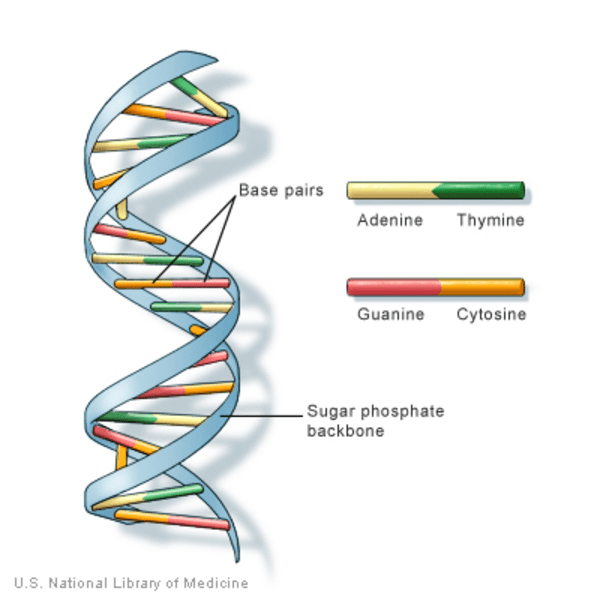
The information in DNA is stored as a code made up of four chemical bases: adenine (A), guanine (G), cytosine (C), and thymine (T). Human DNA consists of about 3 billion bases, and more than 99 percent of those bases are the same in all people. The order, or sequence, of these bases determines the information available for building and maintaining an organism, similar to the way in which letters of the alphabet appear in a certain order to form words and sentences.
DNA bases pair up with each other, A with T and C with G, to form units called base pairs. Each base is also attached to a sugar molecule and a phosphate molecule. Together, a base, sugar, and phosphate are called a nucleotide. Nucleotides are arranged in two long strands that form a spiral called a double helix. The structure of the double helix is somewhat like a ladder, with the base pairs forming the ladder’s rungs and the sugar and phosphate molecules forming the vertical sidepieces of the ladder.
An important property of DNA is that it can replicate, or make copies of itself. Each strand of DNA in the double helix can serve as a pattern for duplicating the sequence of bases. This is critical when cells divide because each new cell needs to have an exact copy of the DNA present in the old cell.
 Human Body
