Definition:
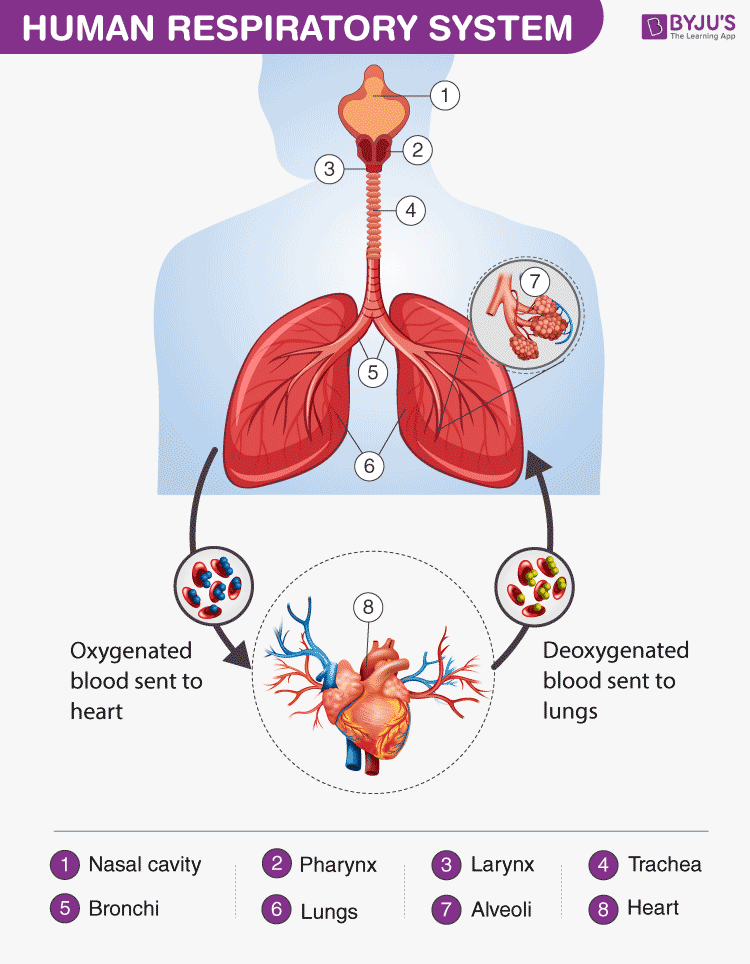
The lungs are a pair of spongy, air-filled organs located on either side of the chest (thorax). They are responsible for the process of respiration, which is the exchange of oxygen and carbon dioxide between the body and the environment.
Parts of the Lungs:
- Trachea (Windpipe): The main airway that brings inhaled air into the lungs.
- Bronchi: Two large tubes that branch off from the trachea, each entering a lung.
- Bronchioles: Smaller branches of the bronchi that spread throughout the lungs.
- Alveoli: Tiny air sacs at the end of the bronchioles where gas exchange occurs.
- Pleura: A thin membrane that covers the lungs and lines the chest cavity, reducing friction during breathing.
- Diaphragm: A muscle below the lungs that contracts and relaxes to facilitate breathing.
Function of the Lungs:
- Gas Exchange: Oxygen from inhaled air is transferred to the bloodstream, and carbon dioxide is expelled from the blood to the air in the lungs.
- Regulation of pH: By controlling the levels of carbon dioxide, the lungs help maintain the body’s acid-base balance.
- Protection and Filtration: The respiratory system filters out dust, pollutants, and microorganisms.
- Vocalization: Air passing through the vocal cords in the larynx produces sound for speech.
- Olfaction (Smell): Airborne molecules are detected by sensory receptors in the nasal cavity.
Do you need more detailed information on any part or function?
 Human Body